
Less Is More: The Quiet Power of Minimalism in Photography

Updated: 3 days ago
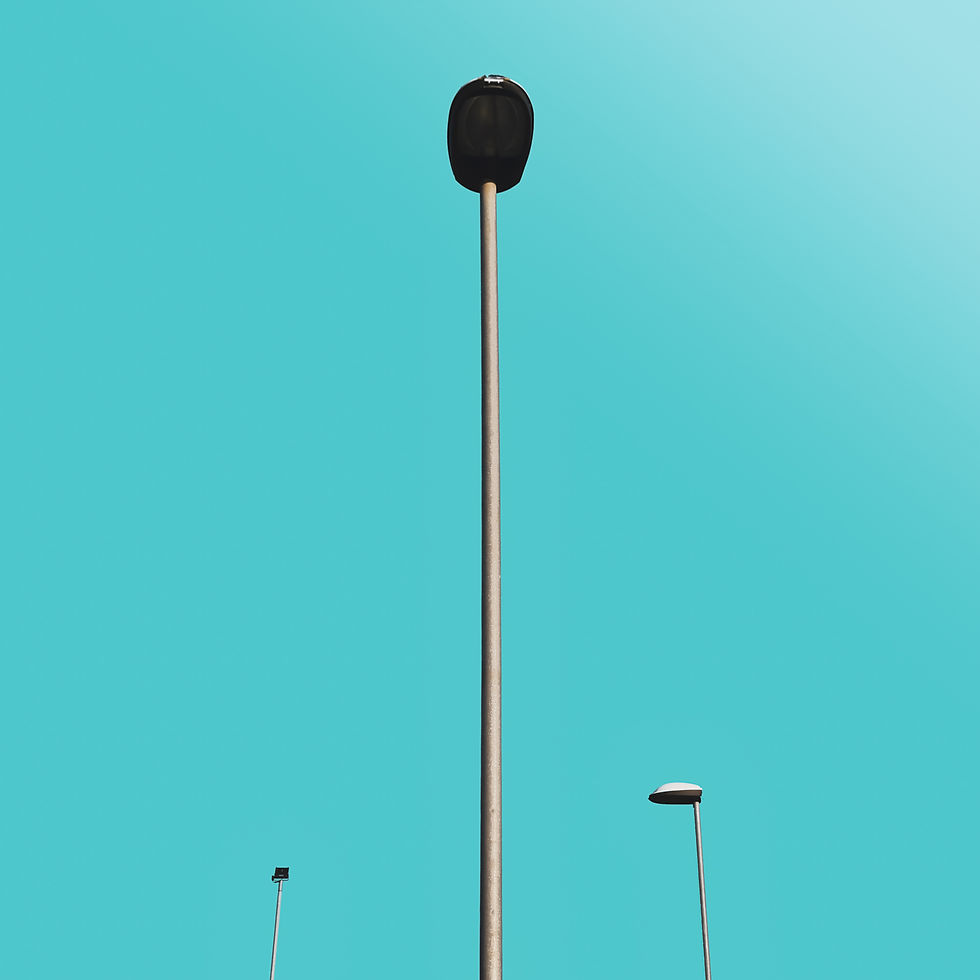
When it feels like every scroll offers an explosion of colour, chaos, and overworked edits, there’s something refreshing, almost radical, about a photograph that dares to be simple. Minimalism in photography isn’t just about empty space or stark compositions. It’s about restraint. It’s about looking harder, seeing more in less, and trusting that simplicity can speak volumes.
Minimalism asks for quiet. And in photography, that can be the hardest thing to achieve.
Seeing What’s Not There
The essence of minimalism lies not in what you include, but what you leave out. A minimalist image often strips a scene down to its bare bones; form, texture, line, light. What remains isn’t emptiness but clarity. The negative space isn’t absence; it’s part of the composition, a pause that gives the image room to breathe.
For photographers, this requires a shift in mindset. Instead of chasing subjects, minimalism asks you to start with space and let the subject emerge from it. It’s less about finding something to photograph and more about noticing how light, geometry, and stillness interact.
The challenge, of course, is knowing when to stop. Simplicity is not the same as blandness. A minimalist photograph should still hold tension. It should suggest more than it shows. Like a whisper in a noisy room, it invites you to lean closer.
The Discipline of Restraint

Minimalism is deceptively difficult. It’s one thing to fill a frame with interesting detail; it’s quite another to create something compelling from almost nothing. Every line, shadow, and proportion has to earn its place.
There’s a kind of discipline to it. A minimalist photographer has to become ruthless in editing, not just in post-production, but in seeing.
It’s about subtraction. Removing the clutter, the obvious, the decorative. What’s left behind should feel inevitable, as if it couldn’t exist any other way.
It’s a quiet practice, and maybe that’s why it appeals to so many of us looking for calm amid visual chaos.
Architecture and the Language of Order
Architecture is a natural home for minimalism. Lines, grids, repetition, symmetry, all the elements are already there, waiting to be distilled into abstraction. That’s the foundation of my Linea series: an exploration of the built environment reduced to light, shadow, and geometry.
When I shoot buildings, I’m not interested in documenting them as structures or spaces to be occupied. I’m interested in how their forms interact with the sky, how lines divide and rejoin, how glass and concrete speak in rhythm. A façade becomes less about architecture and more about composition. It's essentially a study in visual balance.
There’s something meditative about it. Looking through the viewfinder, I find myself adjusting by millimetres, aligning one plane against another until the frame clicks into quiet harmony. It’s the photographic equivalent of tuning an instrument - subtle, but deeply satisfying.
The Emotional Side of Less

Minimalism isn’t just a visual choice, it’s an emotional one. A minimalist photograph creates space not only within the frame but within the viewer. It invites contemplation. You’re not told what to feel; you’re given room to feel it for yourself.
That’s why minimalism, despite its simplicity, can feel so powerful. A single horizon line, a lone figure, a shadow across a wall. These small gestures can carry a surprising emotional weight. They remind us that silence can be as expressive as sound.
In a culture obsessed with “more,” minimalism offers a counterpoint: a way of seeing that values subtlety, patience, and intention. It’s not about deprivation; it’s about attention.
Minimalism and Imperfection
One of the misconceptions about minimalism is that it has to be perfect; clinical, immaculate, lifeless. But real minimalism allows for imperfection. The most interesting minimalist images often contain a small irregularity, a crack in the symmetry, a stray mark, a texture that breaks the calm. These are the human fingerprints that keep the work alive.
There’s always a pulse beneath the precision.
Less Noise, More Vision

Minimalism teaches patience. It slows you down. You start noticing the small things: the angle of a shadow, the rhythm of windows, the quiet interaction of shapes. It becomes a form of meditation through the lens.
And perhaps that’s the deeper lesson here. It's not just about photography, but about how we move through the world. To see minimally is to see mindfully. To strip away distractions and focus on what truly matters.
Because sometimes the most powerful image isn’t the one bursting with detail, but the one that leaves just enough unsaid.


Comments